“It doesn’t cost me anything to be kind.” – Paddington Bear
Weekly Focus: Ahimsa (non-harming intention)
Ahimsa is the first Yama or ethical practice outlined in the Yoga Sutras. This is the practice of finding non-harming intention through our thoughts, words and deeds. When we stop to consider how our actions affect other humans and the world around us, it sets us up from the start to lead a more intentional and thoughtful life.
Ahimsa, or living a life of loving kindness, is so seemingly simple and also amazingly nuanced and challenging! At first glance, one thinks, “of course I don’t wish to harm others, how obvious!” But when we take a deep dive of Ahimsa, we start to see the potential difficulties emerge.
If you believe that people are inherently good, you must believe that most people do not set out to be intentionally hurtful or harmful. Rather it may be a case of intention, privilege (or lack there of), awareness, or so much more. To truly practice a life of Ahimsa, one must have the capacity to be considerate of every thought, every word and every deed.
Now of course, no one is perfect. Recognizing this is an important piece of the puzzle. Ahimsa applies to ourselves (internal experience) as much as it does to our daily life (external experience). This means it starts with our Self-relationship. We will inevitably have harmful thoughts, say hurtful things, or create harmful ripples into the world with our actions — in those moments do we recognize our effects on the world? Do we offer ourselves grace and kindness? Do we look for ways to learn and grow?
The more we practice reflecting and pausing on our thoughts, our words and our deeds, the more we practice being vulnerable to our mistakes. The more we practice growing from our shortcomings, the easier Ahimsa becomes. And as we invite this loving kindness into our lives, the more our daily living feels effortless and harmonious — a skeletal framework for peaceful living.
Passive Pose of the Week: Utthan Pristhasana (dragon pose)
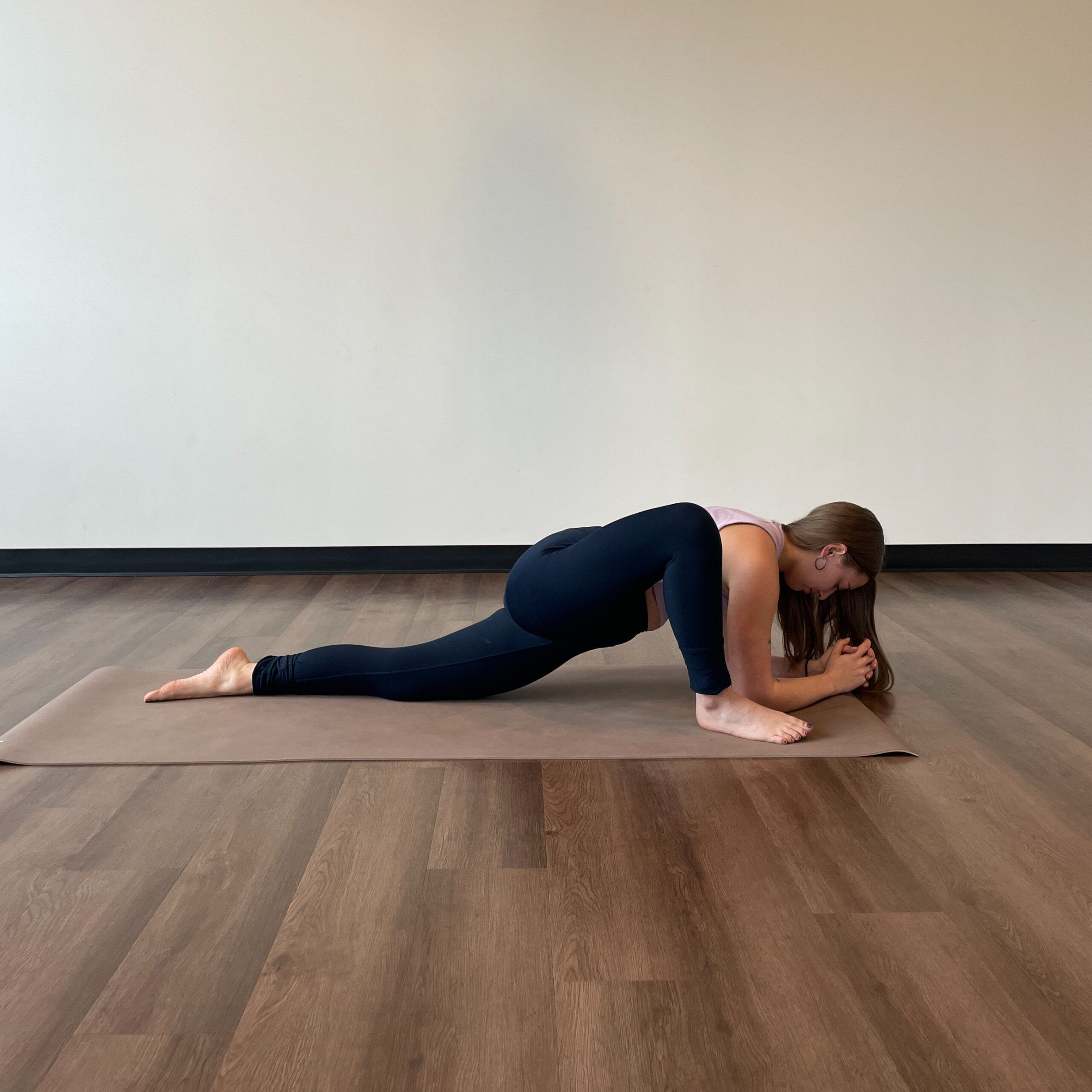
This variation of utthan pristhasana, with the back knee down, provides a more supported variation of the lunge. Offering ourselves physical support in a pose is a tangible practice of Ahimsa.
- Begin in a tabletop position on hands and knees.
- Step your right foot forward and wide of the right hand into a lunge position. Widen towards the edge of the mat to any degree.
- Tuck your back toes and move the left knee back any amount, lengthening the left leg.
- You may want to bring a blanket underneath of the left knee, or even a pillow or small bolster to reduce intensity.
- Place your hands on the floor inside of the right leg. Again, you might bring a blanket, pillow or bolster under the hands, or the forearms to find more comfort and ease in the position of the arms and torso.
- Once you get comfortable in the pose, hold for 5 – 7 breaths before slowly coming out and switching sides.
This variation of utthan pristhasana brings more of a stretch sensation to the back exteneded leg’s front thigh and hip flexor, and may even bring sensation deep into that side of the body as well. This is a great position to take if you are seeking a lengthening for the front of the thigh and a deep, outer glute stretch (front leg).
Active Pose of the Week: Utthan Pristhasana (lizard lunge)
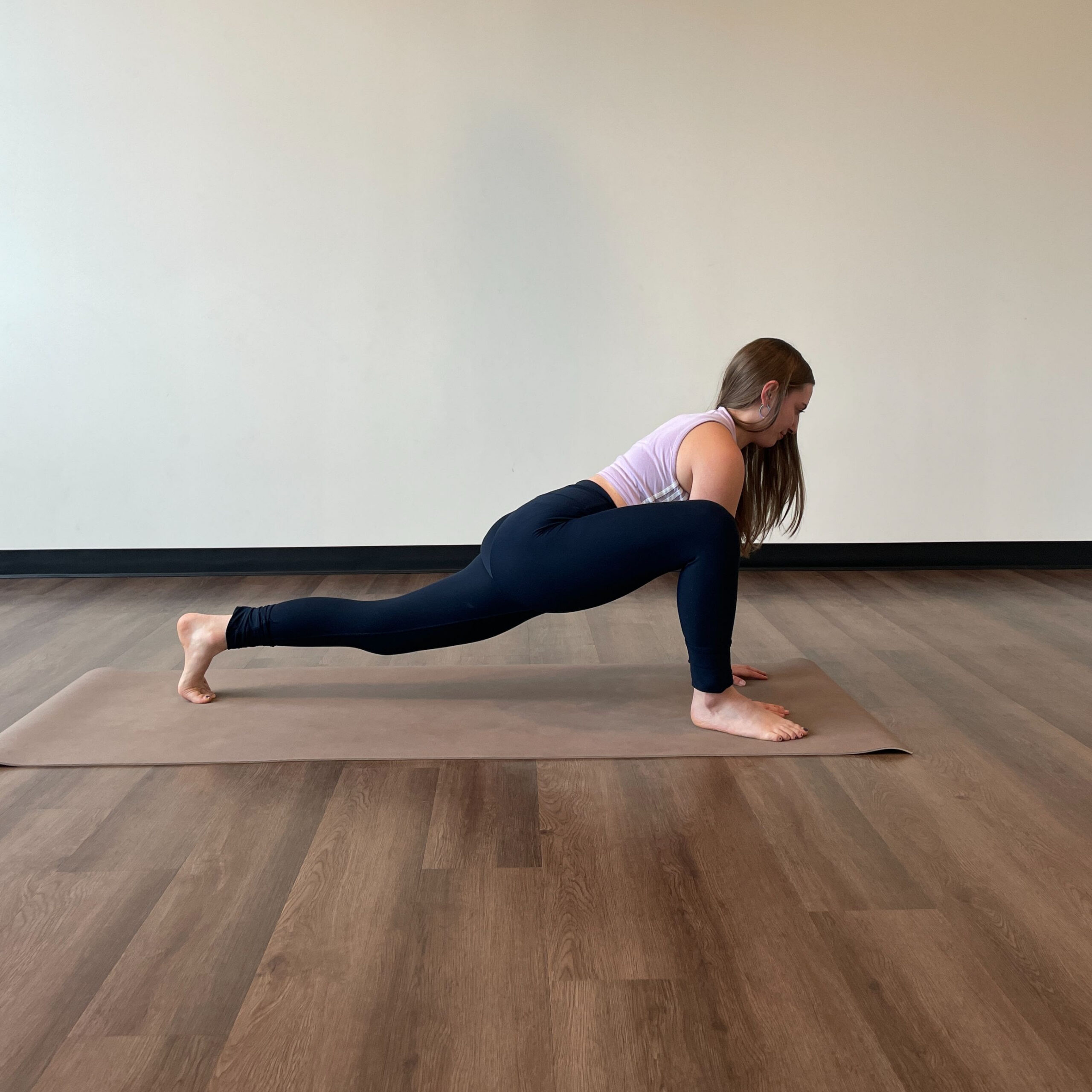
Utthan Pristhasana is a deep inner groin stretch. Try not to push yourself too far into spaces of discomfort to “achieve” the pose. Practice offering kindness to yourself through prop support and breath utilization.
- Begin in a tabletop pose on hands and knees.
- Step your right foot forward and wide into a lunge position. Move your foot towards the edge of the mat to any degree.
- Move your hands inside of your right foot. If the ground feels too far, place your hands on blocks so you don’t feel compressed in the torso.
- Tuck your back toes, lift the knee and straighten and extend the left leg. It may be helpful to take this near a wall, facing away. You can push the back heel into a wall to feel the leg activate. You might also take a block and angle it on the tallest setting, to press against and support the back thigh.
- Hold for 3 – 5 breaths and switch sides.
This variation of Utthan Pristhasana brings a sense of strength and tone to the back extended leg. By strongly lifting and pressing away through the back heel, you might change the stretch sensation, feeling more stretch along the foot, heel, calf and maybe even back upper thigh. Your front bent leg may still feel a deep stretch in the outer glute, while also experiencing a deep inner groin stretch. Remember, each variation is simply different, one is not better than the other. How will you practice ahimsa towards yourself and choose what is right for you today?
Join us in class this week to practice your awareness of ahimsa. See the full schedule HERE.
To get weekly updates from our parent brand, Myriad Fitness + Yoga, follow our weekly podcast “For Time.”
Post navigation