“A man without ethics is a wild beast loosed upon this world.” – Albert Camus
Weekly Focus: The Yamas (ethical practices)
There are five Yamas within the 8-limb path. The Yamas are ethical practices to live by and values to hold. These include Ahimsa (non-harming action), Satya (truthfulness), Asteya (non-stealing action), Brahmacharya (moderation) and Aparigraha (non-grasping).
The 8-limbed Path of the Yoga Sutras sets the stage for guiding ethics that any yogi should hold — the Yamas. Most of these are pretty easy to get behind: reducing harm in our word and deed (Ahimsa), upholding truth (Satya), only taking what is ours (Asteya); and some of these are a little more challenging to swallow: moderating our intake (Brahmacharya) and not clinging to the material world (Aparigraha). These guiding ethics can sometimes challenge us, which is important to our personal and spiritual growth. If we don’t hold ourselves to principles which challenge us, we may find ourselves sitting in complacencey. A challenging set of ethics, morals and principles creates a skeleton from which we can emerge as the best version of ourselves.
This week, we consider not only how the Yamas can act as a skeletal framework for our ethics and morals, but also what other principles we may hold close to our hearts. Our morals, our ethics, these all connect to our Spirit, and give sense to how we want to interact and engage with the world around us.
Knowing what we consider to be priority ethics, morals, principles, however you frame it, helps us to build the structure from which we guide our lives, build our relationships and form our decisions. A skeleton holds us up as we move through the world — how do our ethics and morals hold us up as we engage with the world?
What ethics do you hold which challenge you? Do you allow yourself to actively be challenged by the values that you hold dear? Do you see these challenges as opportunities or as road blocks?
Passive Pose of the Week: Balasana (child’s pose)
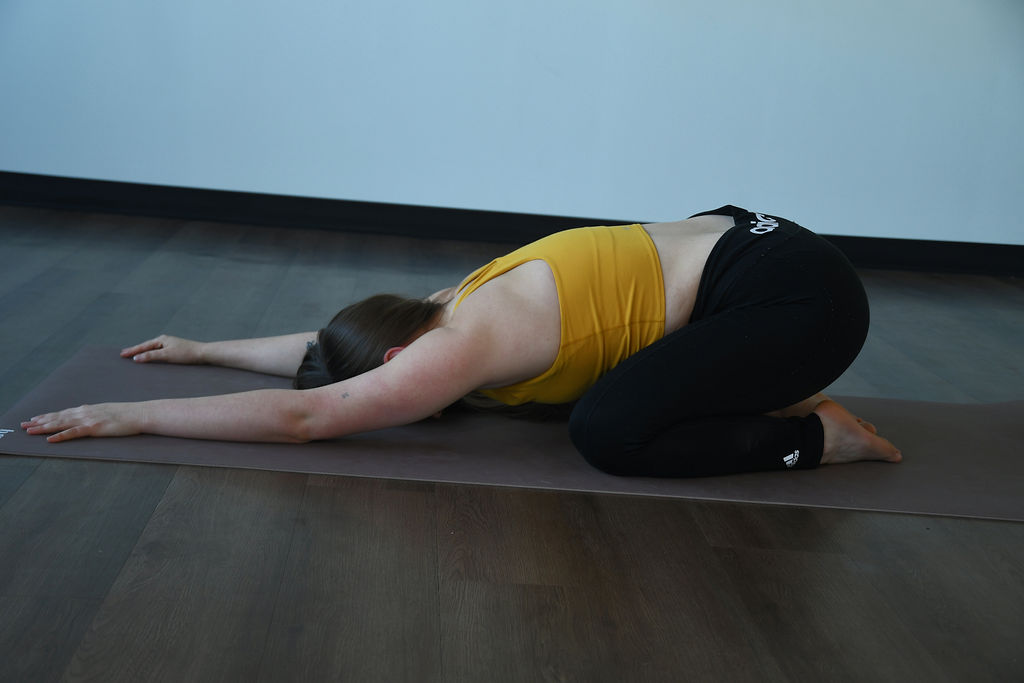
Balasana may be one of the more well-known yoga postures, a sort of baseline or structural posture. We often use this space to hold, protect and preserve rest within our practice, much like the ribs framing the heart.
- Begin in a tabletop position, on hands and knees.
- Widen the knees as much as you like, allowing the toes to draw near one another.
- Push your hips back towards your heels. As you do, the chest may sink to the ground to any degree.
- Arms may reach forward, or back towards the feet alongside the body.
- Hold for 5 – 7 breaths and gently release the pose.
As mentioned above, balasana is often a position used to make a container for rest within our practice. Rest is an important part of a yoga practice. As we pause and hold stillness, it allows us time to check back in with ourselves, reset our breath, and ensure that we are moving to our personal degree of effort for the day. We live in a culture that doesn’t prioritize rest, so we also don’t see it as an efficient use of our time. Do you value and prioritize rest within your yoga practice? Is there space for you to allow more rest, or to appreciate its importance?
Active Pose of the Week: Malasana (garland pose)
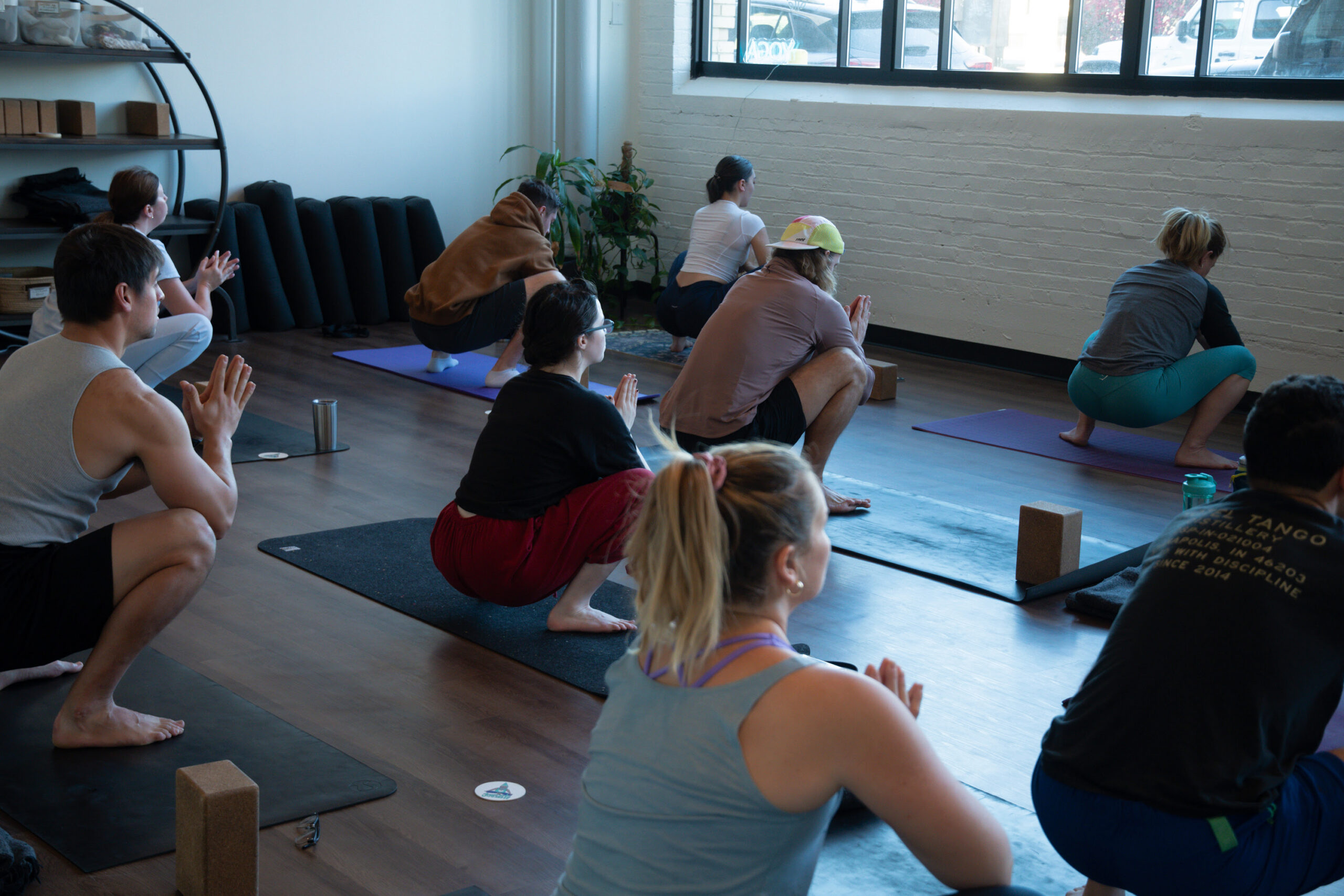
Malasana gets us low in our bodies and low to the earth. This is a space where we can settle into what we hold close, sinking into our values and beliefs.
- Begin in a standing Mountain pose (tadasana).
- Step the feet little wider than the hips. You may experiment with turning the toes forward, or turning them out,.
- Bends the knees and drop the hips towards the floor, coming to the bottom of a squat position.
- Press your hands together in front of the chest.
- Shift your weight between toes and heels until you feel steady and balanced.
- Hold for 3 – 5 breaths and slowly come out.
Becoming more familiar with our personal practice within our unique bodies and experiences is one of the values we teach by at Myriad Yoga. Malasana is a beautiful space to check in with this value. Sometimes, we can become so focused on the prescribed alignment of a pose, that we forget our aim to come to a space of both effort AND of ease. There are a number of ways to adapt malasana to accommodate a wide range of experiences, and to uphold the value of personal and empowered practice. Adjusting the width of your stance or turnout of the feet is just one place to begin. For some of us, adding a thinly rolled towel or blanket edge behind the heels will better support the feet. For others, sitting on one or two blocks will alow us to relax the hips and sit more tall in the pose. What other options or combinations can you explore? Do you value adapting the poses to your body? Do you you find yourself fighting to achieve a “look” in the pose over an experience?
Join us in class this week to practice understanding the Yamas. See the full schedule HERE.
To get weekly updates from our parent brand, Myriad Fitness + Yoga, follow our weekly podcast “For Time.”