“When the ego dies, the soul awakes.” – Mahatma Ghandi
Weekly Focus: Asmita (egoism)
Asmita is the second Klesha (obstacle/veil) and is defined as “egoism” — the false identification of the Self with the mind, body or persona. This klesha creates a separation from our true, unchanging Self and inner divinity, veiling our purpose and inner desire.
Asmita is an attachment to the ego, creating the belief that our self-image is defined by the roles, positions, titles and possessions that we obtain in life. These false identities hide the true unchanging nature of the Self and can lead us to distraction, uncertainty and unhappiness.
Our external identities are ever-changing. Our body ages, we get injured, our jobs change, our relationships evolve or diminish — we inevitably lose anything that we obtain. These changes can be disturbing and challenging but our deep inner nature remains steady, stable and unchanging.
We can update our exterior, change our look, our job, our location, but the core structure remains the same. Removing asmita is a constant practice as we seek to connect with our purpose and function within the greater whole.
Do you find yourself attached to the temporary identities of life? Is it hard to imagine who you are without them? Do you ever feel that you would lose a part of yourself if something shifted?
Passive Pose of the Week: Parsva Savasana (fetal pose)
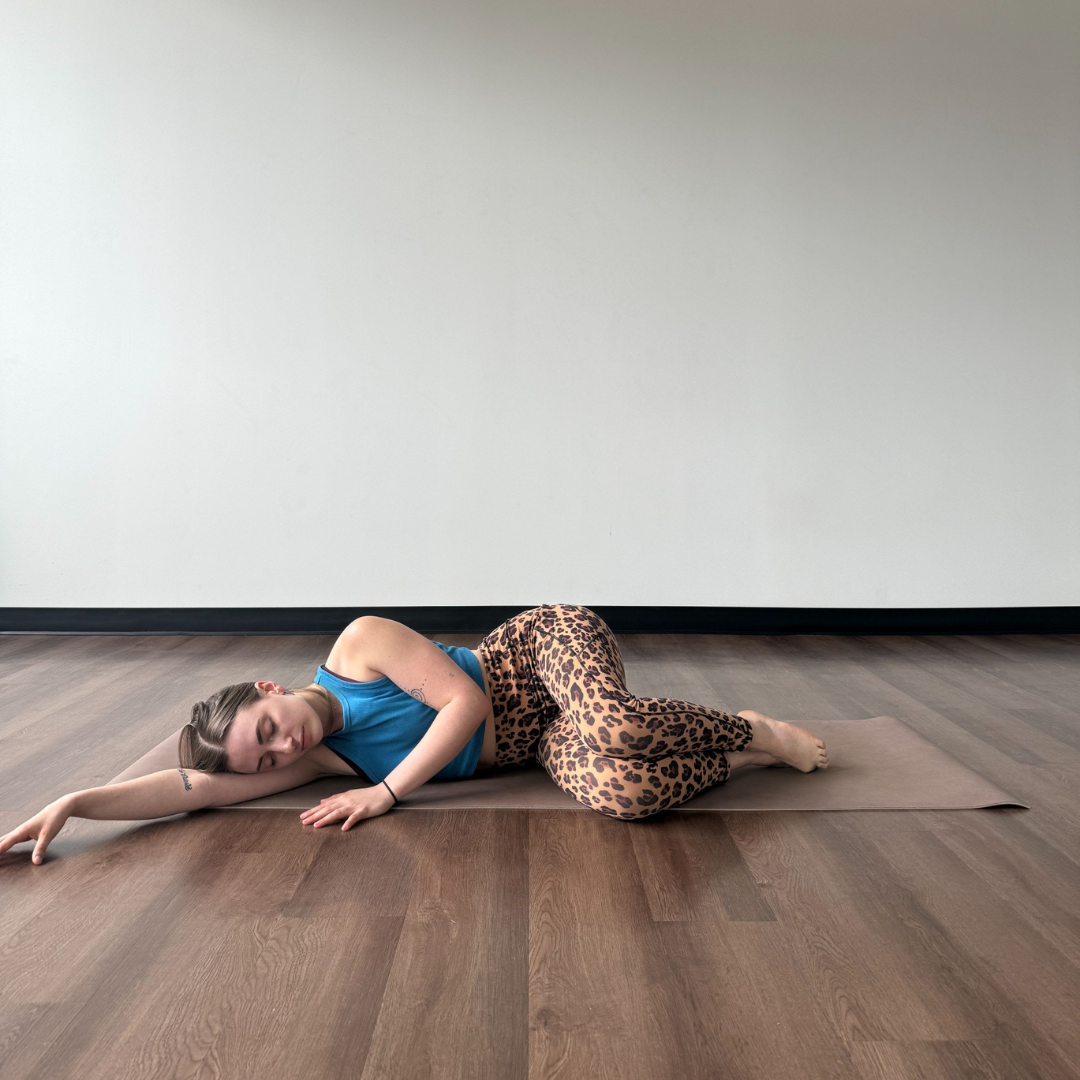
Parsva Savasana is a gentle resting posture meant to bring us back to a state of reawakening. This position recalls the position of the fetus — unconnected, without attachment and waiting to be realized.
- Begin lying down.
- Roll onto your favorite side. Curl the leggs in towards the stomach.
- Support the head with your arm, a folded blanket or a comfortable pillow.
- Set a timer for 5 – 10 minutes and rest, breathing deeply. If you like roll to your second side and practice there.
Parsva Savasana is a very gentle pose. This posture is a great alternative if lying on your back for Savasana brings you any discomfort. You might consider this as an alternative if you have low back pain, are pregnant, or need to create a feeling of container. Standard Savasana can feel exposed and vulnerble; Parsva Savasana allows us to curl in and feel protected, safe and secure.
Active Pose of the Week: Virabhadrasana III (warrior 3)
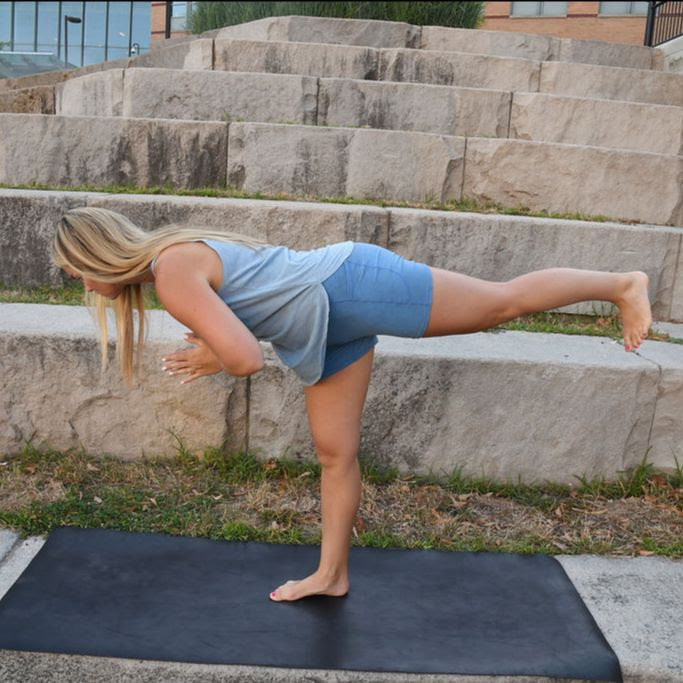
Virabhadrasana III is a challenging balance posture that tests our attachment to perfection when we practice on the mat. Achievement is tied to the ego, it’s difficult to separate the drive of the ego from the needs of the body!
- Begin in a standing Mountain pose (tadasana).
- Have two blocks set up shoulders-width distance at the top of your mat.
- Fold forward and place your hands on the blocks.
- Anchor your right leg, pushing down into the floor with the foot.
- Begin to lift and hover your left leg back behind you, reaching it towards the back of your mat.
- As you lift the back leg, press your hands down into the blocks and extend your spine, much like a halfway lift.
- If your balance feels steady, bring your hands to prayer at your heart’s center.
- Hold for 3 – 5 breaths and switch sides.
In Virabhadrasana III, we are looking to create one long line in the body from the crown of the head to the foot. Often, we see folks lower their torsos without the leg lifting equally. You can think of the body like a see-saw, as much as one side tips down, the other side must lift up, to stay balanced. Don’t let ego get in the way of achieving this essence of the pose. If it is challenging to lift the leg up, try taking Virabhadrasana at more of an angle. Begin standing, extend the left leg long behind your, and tip forward only to the degree that you can keep the body in one even plane, like a see-saw. How does this feel different and challenge the pose in a new way?
Join us in class this week to practice your self-reflection and acknowledgment of the Kleshas. See the full schedule HERE.
To get weekly updates from our parent brand, Myriad Fitness + Yoga, follow our weekly podcast “For Time.”